
From Extremadura to Europe: Replicating Spain’s Hemp Success
Hungarian representatives visit the MarginUp! Spanish Use Case to see how hemp and kenaf grown on marginal lands are feeding a new bio-based construction value chain
In northern Cáceres, one of Spain’s most water-stressed agricultural regions, the MarginUp! Spanish Use Case is demonstrating that marginal and degraded lands can become the starting point of an entirely new value chain, one that links farmers to the construction industry through crops like hemp and kenaf.
In April 2026, that potential took a decisive step towards replication. Representatives from the Hungarian Ministry of Agriculture and Hungarian companies travelled to Extremadura to see the pilot first-hand, a visit that turned the Spanish Use Case from a local experiment into a blueprint other countries can follow.
A pilot built on challenging ground
Implemented across multiple municipalities in northern Cáceres, the Spanish Use Case integrates drought-resistant industrial crops into existing rotations alongside tomatoes, maize, and peppers. The aim is to tackle the region’s most persistent agricultural problems: soil degradation, low organic matter, and water scarcity driven by years of intensive farming.
The early results are encouraging. Rotation systems including hemp and kenaf are showing higher biomass yields than monocultures, and farmers are refining agricultural practices for hemp cultivation as the trials progress. The crops themselves are well suited to Extremadura’s high temperatures and limited water availability, requiring up to 50% less water than traditional regional crops and growing with minimal mineral fertiliser inputs.
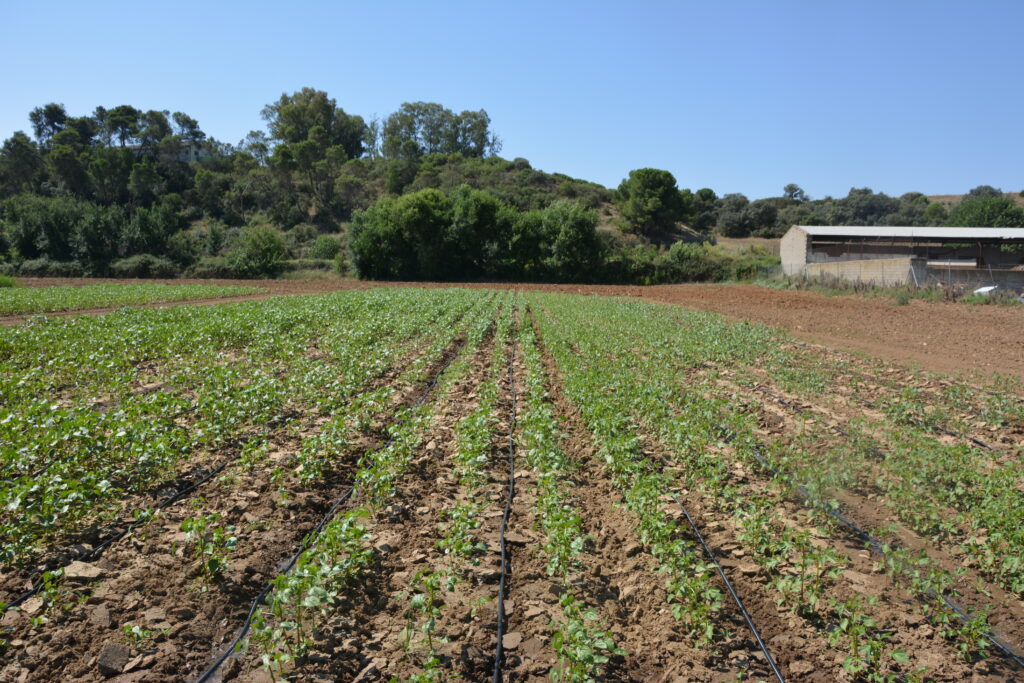
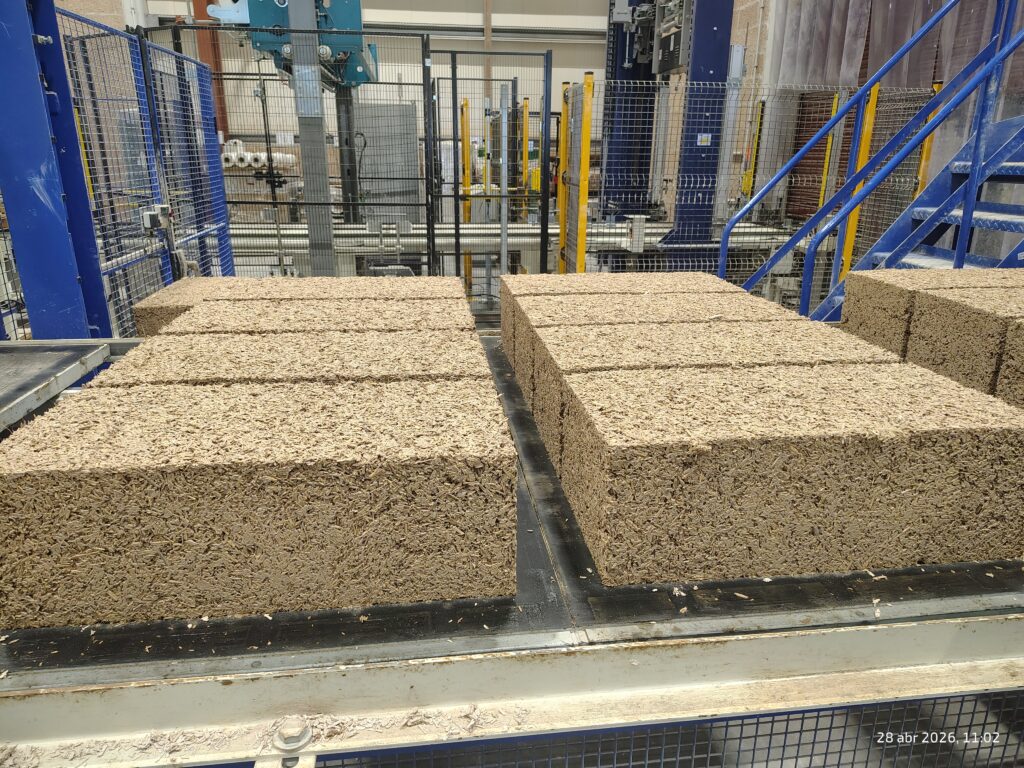
The benefits go beyond the field. A considerable increase in pollinator presence has been observed during the crops’ flowering period between July and September, a sign of improving biodiversity. According to the literature, industrial hemp can sequester 9–15 tonnes of CO₂ per hectare annually, comparable to a young forest, in just five months of growth. And with biomass yields of around 7 tonnes of dry stalks per hectare, the harvest is being turned into prefabricated construction panels that replace fossil-based materials such as polystyrene.
Nothing goes to waste. The system follows a cascade-use model: fibres go to construction, while the residual material from panel production is used for biogas and transformed into organic fertiliser in the form of digestate, which returns to the fields and closes the cycle.
Seeing is believing: the Hungarian visit
For replication to happen, stakeholders need to see a working model, and that is exactly what the visit to Extremadura offered. At the Extremadura Scientific and Technological Research Centre (CICYTEX) and the Spanish Leaf Tobacco Company (CETARSA), the Hungarian delegation toured the pilot sites where field trials are developed and fibre separation processes are tested.
“Hemp and kenaf-based construction materials support the development of sustainable products in favour of a climate-neutral economy and a reduction in GHG emissions,” explained Jerónimo González, Department Head at CICYTEX and pilot leader at MarginUp!. “MarginUp! is bringing this innovation to Spain by developing a business model that stakeholders across the country and Europe can replicate, as was demonstrated in the visit of the Hungarian stakeholders.”
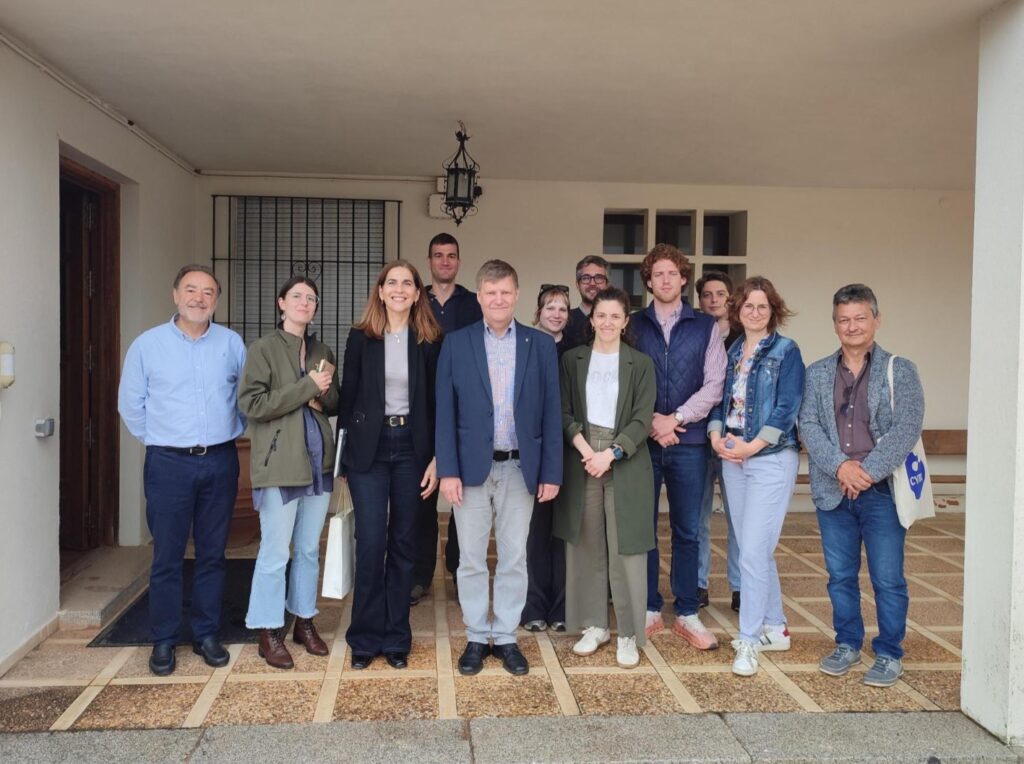
The interest from Hungary is telling. A country with its own long tradition of hemp production, Hungary is looking at how the Spanish model, from marginal-land cultivation through to industrial processing, could be adapted at home. It is exactly the kind of knowledge exchange that MarginUp! is designed to foster across Europe and beyond.
The visit also took the delegation beyond the fields, to Cânhamor, a Portuguese company producing carbon-negative building blocks from hemp, lime, and clay. Considered a reference model for scalable low-carbon construction in the Iberian Peninsula, Cânhamor’s ECOblocks show how natural resources can replace conventional fossil-based materials while reducing both costs and environmental impact across the construction lifecycle.
“The growing demand in the EU for truly sustainable, carbon-negative and highly performing construction materials has proven to us that our ECOblocks are not just a ‘green trend’, but a genuine, impactful revolution in the construction sector,” said Frederico Barreiro, Commercial Director at Cânhamor.
From pilot to European model
At the heart of the Spanish Use Case is a new value chain connecting sustainable agriculture with bio-based industries, using hemp and kenaf biomass for construction panels, biogas, and organic fertilisers. Collaboration across the entire chain has already enabled successful testing of fibre separation processes, prototype precast hemp panels, biogas production using hemp dust in the laboratory and pilot plant, and the characterisation of hemp fibres. CICYTEX leads the pilot with the support of Ambienta, Modular Home, COPAL, and the CTAEX Technological Centre.
With countries such as France and Portugal leading advances in hemp construction, the Extremadura project is positioning Spain as an emerging leader in the field and offering a scalable model for Europe’s transition to a greener, circular economy. As interest grows across the continent, including from traditionally hemp-producing countries like Hungary, the Spanish Use Case underscores what MarginUp! set out to prove: that nature-based solutions grown on marginal lands can address climate challenges while strengthening rural economies.
Curious to learn more? Explore the full story of the Spanish Use Case in the Replication Hub.
About MarginUp!
MarginUp! is developing sustainable and circular value chains to produce bioproducts and biofuels from natural raw materials grown on marginal lands. By introducing climate-resilient and biodiversity-friendly non-food crops on marginal and low-productivity lands, MarginUp! will increase farming system resilience, enhance biodiversity, and promote stakeholder participation.
