
Unlocking Marginal Lands: Key Insights from MarginUp!’s Satellite Event at GBS2026
There is no universal crop or model for marginal lands, but with the right policies, markets and partnerships they can become a real engine for Europe’s bioeconomy. That was the shared message of MarginUp!’s final event in Dublin.
On 19 October 2026, MarginUp! opened the week of the Global Bioeconomy Summit 2026 with a full-day satellite event at the Convention Centre Dublin: Unlocking Marginal Lands for the Global Bioeconomy: Industrial Feedstocks for Socioeconomic Transformation and Climate Action through Policy Dialogue, Investment, and Partnerships.
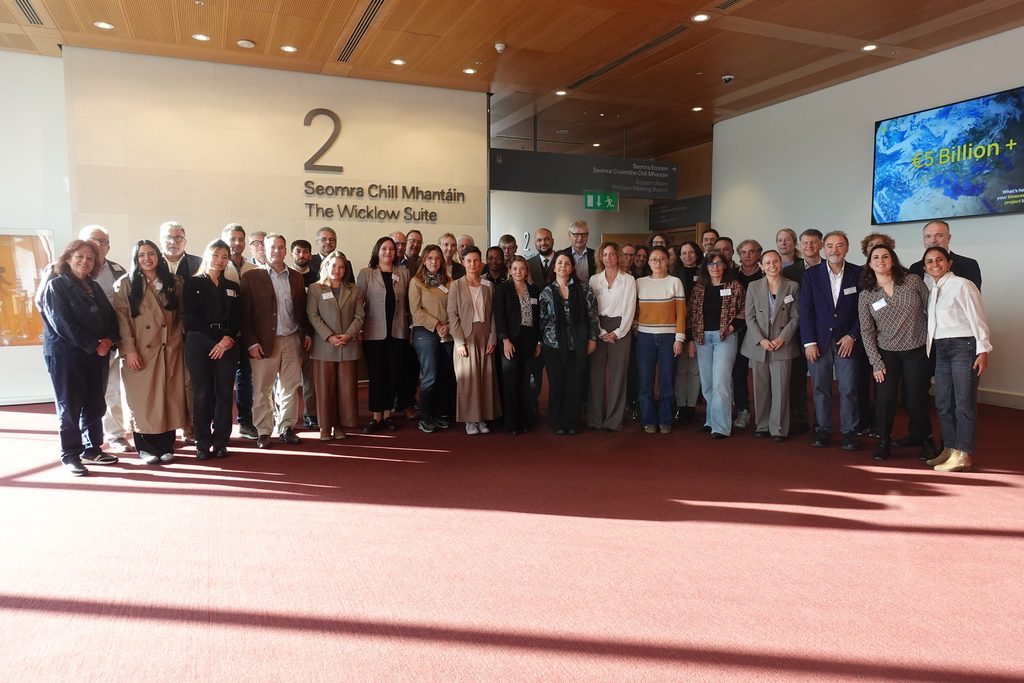
Researchers, policymakers, industry representatives and practitioners joined in person and online to share lessons from biomass value chains on marginal lands in Europe, Africa and South America. Together, they explored what it takes to turn underused land into sustainable industrial feedstock, and how to do it in a way that works for people, nature and the climate.
Rethinking where value comes from
The day opened with three perspectives on where the value of marginal lands really lies.
Rocio A. Diaz-Chavez (Senior Research Fellow, Imperial College London) reminded the audience that our societies moved from a natural economy to a fossil-based one. The bioeconomy is a chance to return to natural resources, but with far greater potential, serving food security, health and well-being, bio-based industrial development and sustainable energy.
Barna Kovacs (Secretary General, BIOEAST) focused on keeping value in our regions and rethinking biomass production and use towards 2040. He framed the challenge around three goals: sustainability, by maintaining soil, water and biodiversity while creating economic value; competitiveness, by improving products, processes and returns; and climate change, by rethinking what we produce, where we produce it and how we use it.
Nikolaos Damatis (Secretary General, Hellenic Biomass Association, HELLABIOM) took the discussion from marginal land to market. His starting point: understand the conditions of each site, find the opportunity, and match it to the local reality. His key messages were clear:
- There is no universal crop or model, and environmental safeguards must be built in from the start.
- The market must shape the chain. Start from the intended product and its buyer, and define specifications, acceptable price, volumes and certification early on.
- Supply chain realities matter. Harvesting, collection, storage, pre-treatment and transport can decide whether a business case works or fails, so scale must match the resources available.
- Think cascade and wider markets. Partial substitution, cascading uses and markets beyond the region can make up for limited local demand.
Lessons from the field
Experiences from Ireland, from sister project MIDAS and from MarginUp!’s own use cases showed what this looks like on the ground.
James Claffey (Deputy CEO, Irish Rural Link) offered an Irish rural perspective. Around 45% of Ireland’s land area is classified as marginal, and the bioeconomy could become an engine of rural revival for peripheral areas. But he warned that bioeconomy policies driven only from the top down risk deepening social inequalities and regional divides. His advice: bring communities along from the start, before project designs are fixed, work through trusted local intermediaries, and make local benefits visible and fairly shared.
Maurizio Cocchi (Consultant, ETA Florence) presented the MIDAS project, which develops and demonstrates innovative solutions to grow industrial crops on marginal agricultural land and build sustainable value chains for a wide range of bio-based products. MIDAS tackles the challenge from both ends of the value chain: upstream, by optimising crops and cropping systems and understanding their benefits for agroecosystems across Europe; and downstream, by improving and validating the performance of bio-based products and their resource efficiency in a circular economy.
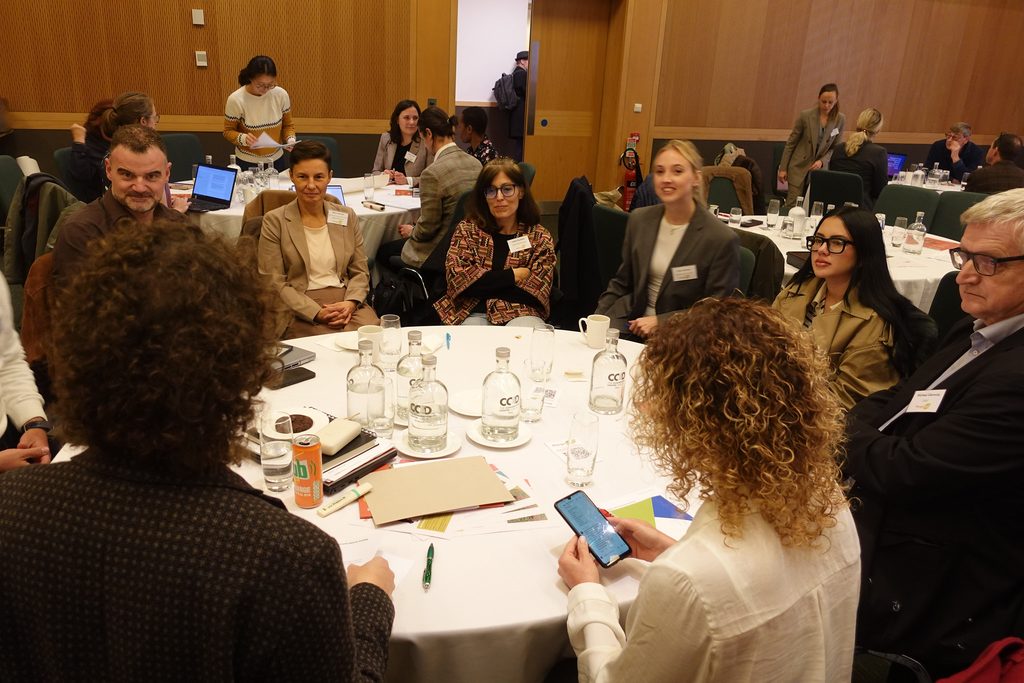
Philipp Grundmann (Head of Research Group, ATB), MarginUp! coordinator, presented the project’s pathways and pilot use cases in Europe, Africa and South America. He introduced seven draft policy guidelines for the sustainable use of marginal lands, built on three pillars: knowledge and trust, finance and markets, and governance and partnerships.
- Clarify the trade-offs of cultivating alternative crops on marginal lands.
- Communicate the multiple benefits and environmental trade-offs of these crops to stakeholders.
- Reduce financial barriers and risks for farm businesses and value chains that deliver multiple benefits.
- Resolve regulatory barriers and govern competing land-use conflicts.
- Strengthen market demand and incentives for products from marginal lands.
- Support collaboration across the entire marginal-land biomass value chain.
- Improve policy coherence to encourage the multifunctional use of marginal lands.
The guidelines were presented as a consultation draft, and feedback gathered in Dublin will shape the final policy brief.
Regional rules, European coordination
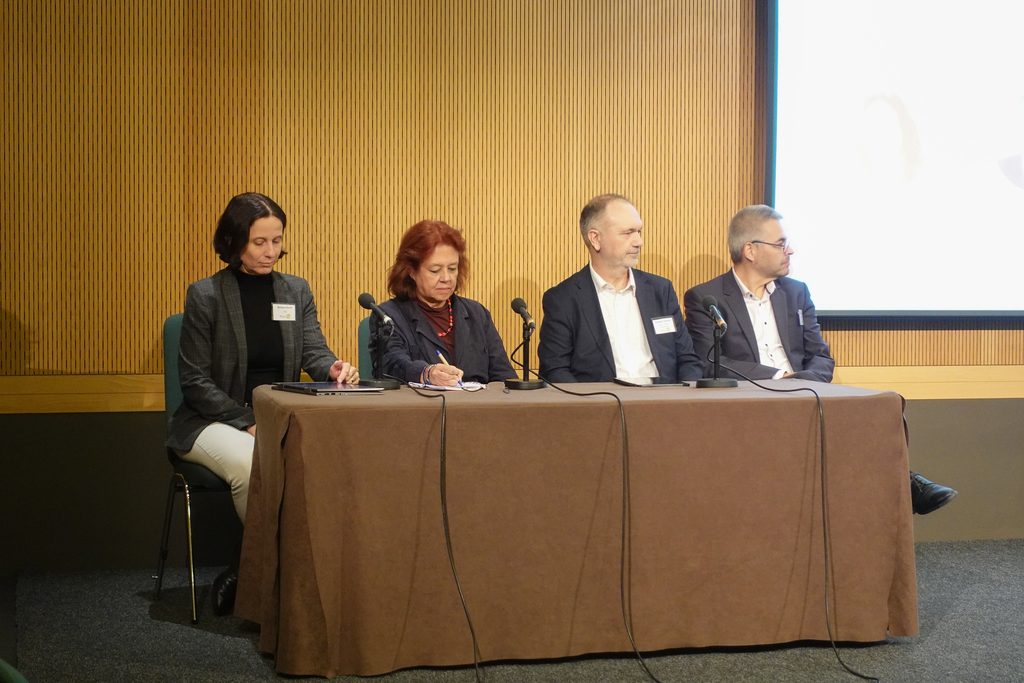
Turning to policy, Barna Kovacs (BIOEAST), James Claffey (Irish Rural Link), Clara Amaro (Innovation Consultant, INNOMINE) and Michael Glemnitz (Researcher, ZALF) debated what makes marginal-land pathways credible, viable and responsible.
Asked whether Europe needs a single, standardised policy on marginal lands or flexible regional ones, the panel leaned towards both. What counts as marginal land differs from region to region, depends on local production systems and is shifting with climate change. In time, crops grown on today’s marginal land could even become the main cropping system in some regions. “We will need flexible and more region-specific rules, not a Europe-wide ruling system,” said Barna Kovacs, “but we clearly need European coordination, because without it we cannot scale up, and we cannot work across borders.”
The same logic applies to balancing productivity with biodiversity and social goals. The type and strength of environmental impacts depend heavily on local conditions, so goals, measures and instruments must be adapted to each region. Panellists called for governance instruments that leave room for regional adaptation and co-design.
On replication, the most common success factor was people. Grouping farmers and stakeholders together builds shared knowledge, and, as noted in the Irish case, rural areas today have more educated young people than ever before. Involving them and focusing on regional economic value is key.
The Dublin Agenda
In the afternoon, participants worked in four parallel forums on technology, markets, policy and partnerships. The day closed by bringing their conclusions together into a set of priorities, the “Dublin Agenda”.
- Define marginal land. To make sure expanding marginal-land use in Europe does not shift environmental or social impacts to the Global South, speakers pointed to the missing link: a clear definition of marginal land and its integration into land-use planning.
- Create sustained demand. The first commitment that would make promising pathways ready for commercial development is sustained demand for sustainable biomass.
- See the full value of biomass. Biomass valorisation rests on three pillars. The visible one is the shift to renewable energy and green carbon. The other two often go unseen: environmental protection and climate resilience, as turning biomass into bio-based products can help rehabilitate soils and build resilience to the climate crisis. The key is to make those two pillars visible, and companies’ ESG strategies are the link. Projects become financially viable not only through big investments, but by remaining bankable, and that means meeting ESG criteria.
- From yield to territory. To scale up, research and implementation should move away from yield-focused approaches towards what Barbara Sturm (Scientific Director, ATB) called “technology for territory”: using precision territory assessment to map site potential and match technologies and crops to site-specific conditions.
Looking ahead
Nearly 60 participants joined the MarginUp! satellite event, and more than 1,500 delegates from around the world attended the Global Bioeconomy Summit 2026, making Dublin a fitting stage for the project’s final event. The day made one thing clear: unlocking marginal lands is not about finding a single crop or model. It is about connecting the dots: matching crops to places and products to markets, and linking regional action with European coordination. These insights now feed into MarginUp!’s final recommendations and its lasting legacy.
MarginUp!’s use case results, tools and guidance remain openly available on the Replication Hub. Missed the event, or want to revisit a session? Watch the full recording on YouTube (Part 1 and Part 2) and browse the photos in our Flickr album.
